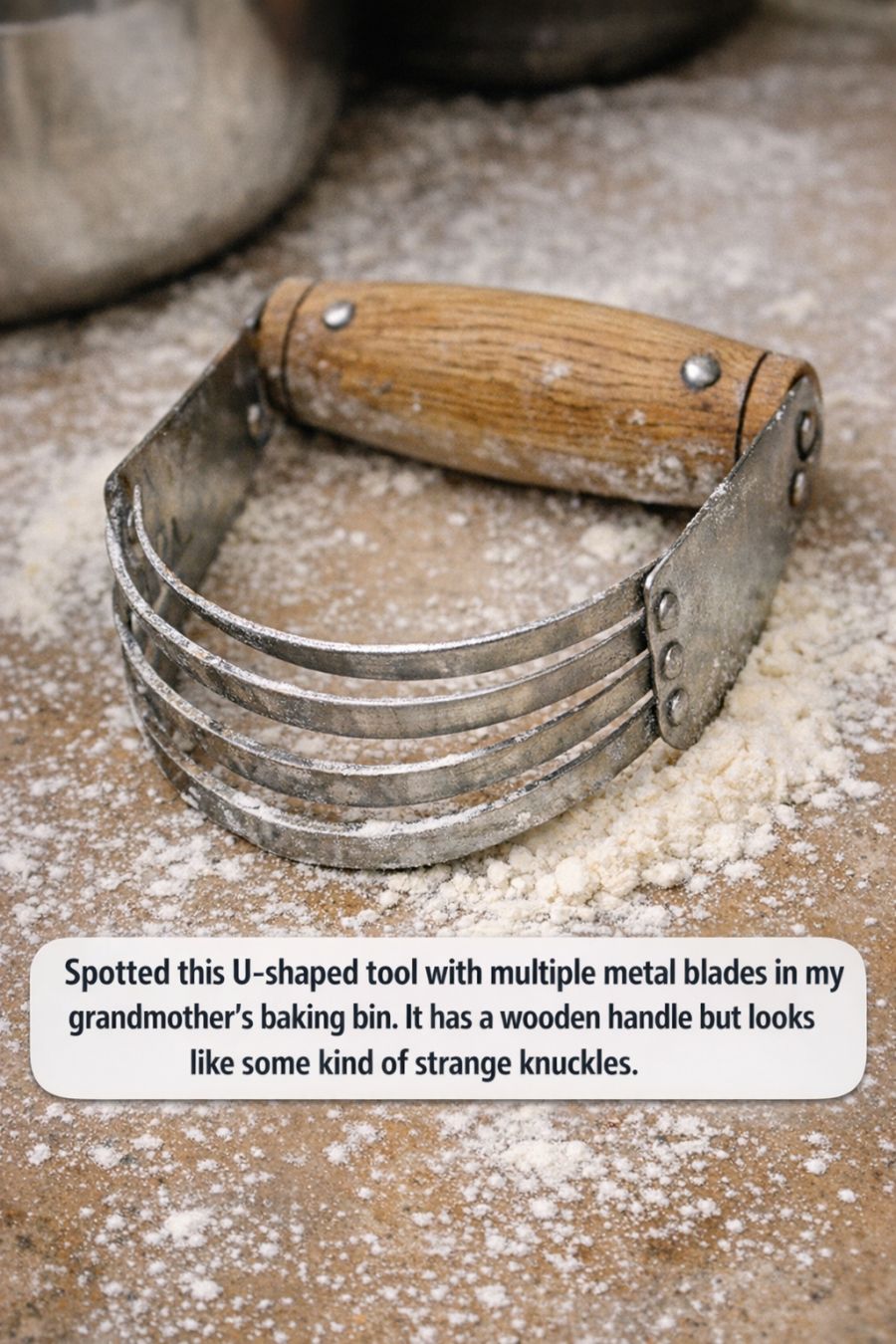
Spotted this U-shaped tool with multiple metal blades in my grandmother’s baking bin. It has a wooden handle but looks like some kind of strange knuckles.
6. Common Vintage Variations You Might Find In Grandma’s Kitchen
Vintage pastry blenders may exhibit a variety of designs, often reflecting the era in which they were made. Some might have intricately carved wooden handles or decorative metalwork, indicating a time when kitchen tools were crafted with more aesthetic consideration.
Older models might also differ in the number of blades, with some featuring as few as three or as many as seven. The spacing and curvature might vary, offering different blending experiences. These variations can tell a lot about the preferences and technological advances of the time they were produced.
7. Key Clues That Confirm It’s A Pastry Blender, Not Something Else
To confirm that the mysterious tool is indeed a pastry blender, look for several key features. The U-shaped design with a wooden handle and multiple metal blades is a strong indicator.
Additionally, the blades should be slightly curved and evenly spaced. If the tool feels comfortable in hand and the blades align for a rocking motion, it’s likely a pastry blender. The lack of sharp edges further distinguishes it from any cutting tool or weapon.
8. The Baking Jobs This Odd-Looking Tool Is Perfect For
The pastry blender excels in creating various doughs that require fat to be cut into flour. It is ideal for pie crusts, biscuits, scones, and shortbread, where a tender, flaky texture is desired.
Its ability to quickly and uniformly incorporate cold fat into dry ingredients makes it indispensable in preventing the dough from becoming warm and overworked, which could lead to tough pastries. Its design allows for a gentle touch, crucial for maintaining the desired dough consistency.
9. Modern Alternatives And How They Compare
Today, modern alternatives to the pastry blender include food processors and stand mixers with paddle attachments. These appliances can accomplish similar tasks but with less manual effort.
While these tools offer convenience, they lack the tactile feedback and control a pastry blender provides. Overmixing can occur easily with machines, leading to denser pastries. Many bakers still prefer the traditional pastry blender for its precision and simplicity.
10. Caring For And Displaying A Vintage Pastry Blender
Caring for a vintage pastry blender involves regular cleaning and maintenance. The wooden handle should be wiped down with a damp cloth and occasionally treated with mineral oil to prevent drying and cracking.
The metal blades should be cleaned with warm soapy water and thoroughly dried to prevent rust. Displaying the blender in a kitchen is a charming nod to culinary history, and it can be hung on a wall or placed in a decorative utensil holder.
11. When A Quirky Kitchen Find Becomes A Family Heirloom
Discovering a vintage pastry blender in your grandmother’s kitchen can evoke a sense of nostalgia and connection to family traditions. It becomes more than just a tool; it is a testament to the baking practices passed down through generations.
As an heirloom, it carries stories and memories of countless baking sessions, making it a cherished item in the family. Preserving and using it allows you to honor the legacy of those who came before while continuing the tradition of creating delicious baked goods.










Post Comment