11 Vegetables That Regrow After Cutting (Endless Harvests)
Are you tired of growing those generic, everyday vegetables that just come in once a year and leave you unfulfilled? Why not look into more exciting options?
In today’s article, allow me to walk you through a list of vegetables that can potentially regrow after cutting in the right conditions, essentially providing you with endless harvests throughout the year. Let’s dive right into it!
What Does “Cut-And-Come-Again” Mean?


Cut-and-come-again is basically a unique harvesting method where the leaves and stalks of a plant are cut, but the crown and roots are left intact. This encourages the plant to regrow (even better than before sometimes) and produce multiple, generous harvests throughout the course of the year.
Vegetables That Regrow After Cutting

🌱 Get Your FREE 2026 Sowing Calendar! 🌱
Plan your best garden yet! This printable 2026 Sowing Calendar tells you exactly when to plant your favorite vegetables, herbs, and flowers for a thriving garden all year long.
1: Lettuce

Cut the bigger leaves around the outer edge of the lettuce and let the center part grow. Make sure you do this in cool weather only!
2: Spinach

Another hardy leafy green that can provide you with generous, repeated harvests if you only snip the outer leaves. Protect your spinach from bolting by placing it in the shade and growing it in cooler conditions.
3: Kale

Cut mature kale leaves from the bottom of the plant to keep it producing tender leaves for months on end!
4: Swiss Chard

This colorful, peppery, leafy green can offer continuous harvests if you trim outer stalks carefully and let the core grow undisturbed.
5: Arugula

Arugula is a classic cut-and-come-again leafy green. Snip the outer leaves to encourage new growth. It’s best to harvest it young while the leaves are still tender.
🌱 Get Your FREE 2026 Sowing Calendar! 🌱
Plan your best garden yet! This printable 2026 Sowing Calendar tells you exactly when to plant your favorite vegetables, herbs, and flowers for a thriving garden all year long.
6: Mustard Greens

This fast-growing green offers a tangy, slightly spicy flavor. Snip the outer leaves as needed and let the center grow for continuous harvests.
7: Collard Greens

Like other leafy greens on this list, trim collard green leaves from around the lower edges of the plant and let the rest of it regrow.
8: Green Onions / Scallions

For green onions, you ideally want to snip the green tops so that their bulbs continue to produce new shoots for an extended period.
9: Bok Choy

🌱 Get Your FREE 2026 Sowing Calendar! 🌱
Plan your best garden yet! This printable 2026 Sowing Calendar tells you exactly when to plant your favorite vegetables, herbs, and flowers for a thriving garden all year long.
For bok choy, harvest the outer stalks when you need to and leave the center alone to regrow. You can also cut this classic Asian vegetable at the base and let it sprout from there.
10: Celery

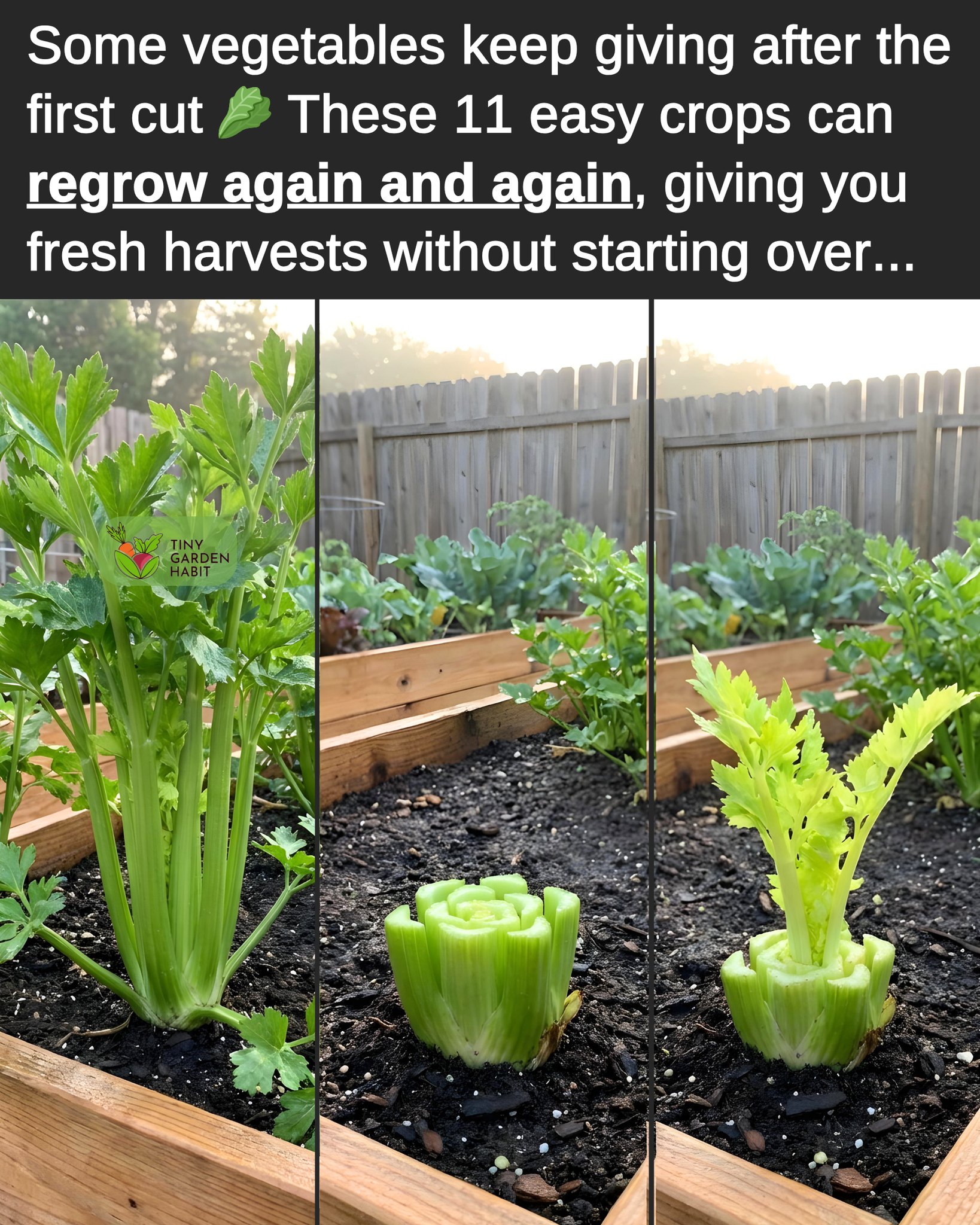
Celery typically regrows from the crown area, but only if you cut the stalks above the soil. Ensure your cuts are precise and the stalks aren’t injured in any way.
11: Leeks

Cut leeks just above the roots, and you might see new greens sprouting from the base in a couple of weeks. Just keep in mind that the regrowth is usually smaller and won’t last as long as the first harvest.
How Many Times Can You Harvest From The Same Plant?

Well, with some vegetables, you may be able to harvest as many times as you want throughout the year. Others will probably give you a limited number of harvests, but it should be enough to keep your pantry full for a while.
To put it simply, it depends on the vegetable:
🌱 Get Your FREE 2026 Sowing Calendar! 🌱
Plan your best garden yet! This printable 2026 Sowing Calendar tells you exactly when to plant your favorite vegetables, herbs, and flowers for a thriving garden all year long.
Can You Regrow Vegetables In Containers?

Yes! Many of the cut-and-come-again vegetables we discussed today weren’t some completely different plant species; they were your classic kale, lettuce, arugula, leeks, and celery. Because of their compact growth, most of these vegetables can easily be grown in pots and containers.
Experienced gardeners prefer to grow cut-and-come-again vegetables in containers and reserve large garden areas and raised beds for more space-consuming and invasive plant varieties.
Let’s Conclude

If you’re anything like 2020 me and tired of growing the same once-a-year vegetables that disappear after harvest, it’s time to switch things up. Cut-and-come-again varieties will completely change how you garden, they’re productive, rewarding, and surprisingly easy to maintain.
Continuous harvesting does take a little more effort than traditional gardening, but trust me, it’s worth every minute once you see fresh greens coming back again and again. So grab your pruners, get planting, and enjoy those endless harvests!